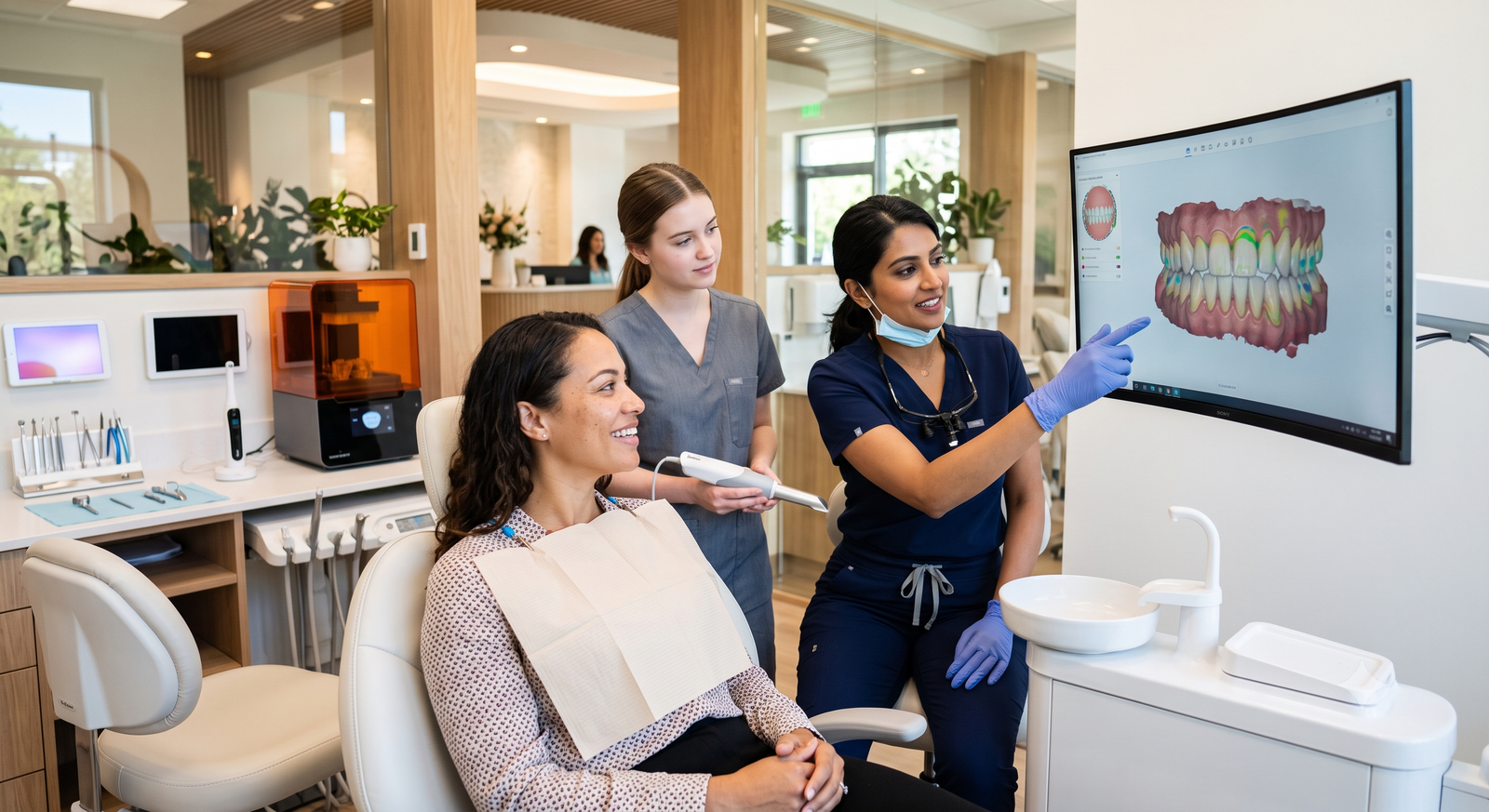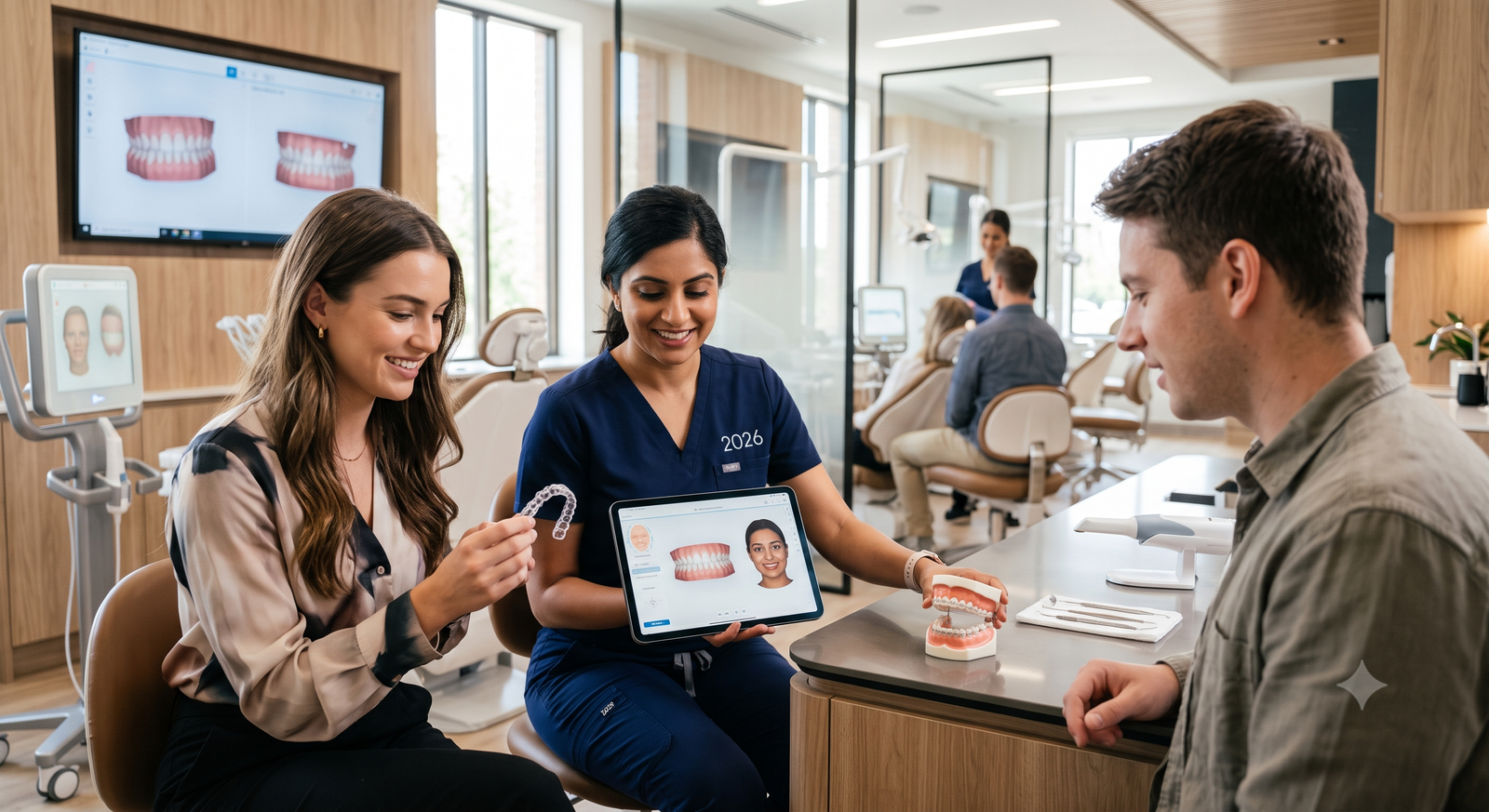
Two effective approaches to straighter teeth
Clear aligners and fixed braces both move teeth with controlled force. The best option depends on the bite problem, age, lifestyle and cooperation—not simply which appliance looks newer.
When clear aligners may help
Aligners are removable and discreet. They make brushing and eating easier, but must usually be worn for most of the day. Lost trays, inconsistent wear or frequent removal can delay progress. Some complex rotations, impacted teeth and major bite corrections may need fixed appliances or combined techniques.
Why braces remain relevant in 2026
Metal and ceramic braces provide continuous control and do not depend on remembering to wear them. They can be useful for complex movements. Cleaning requires extra care, and hard or sticky foods can damage brackets.
What determines treatment time?
Severity and type of crowding or bite problem
Jaw growth and age
Appliance choice and biological response
Attendance and patient cooperation
Retainer use after active treatment
Orthodontic consultation in Bijnor
Records such as photographs and dental X-rays help Dr. Parvez Alam Khan evaluate the full bite. Amber Dental Care explains realistic choices, expected duration and retention before treatment begins. Online aligner promises without direct clinical supervision can miss gum, root or jaw problems.