What is laser dentistry?
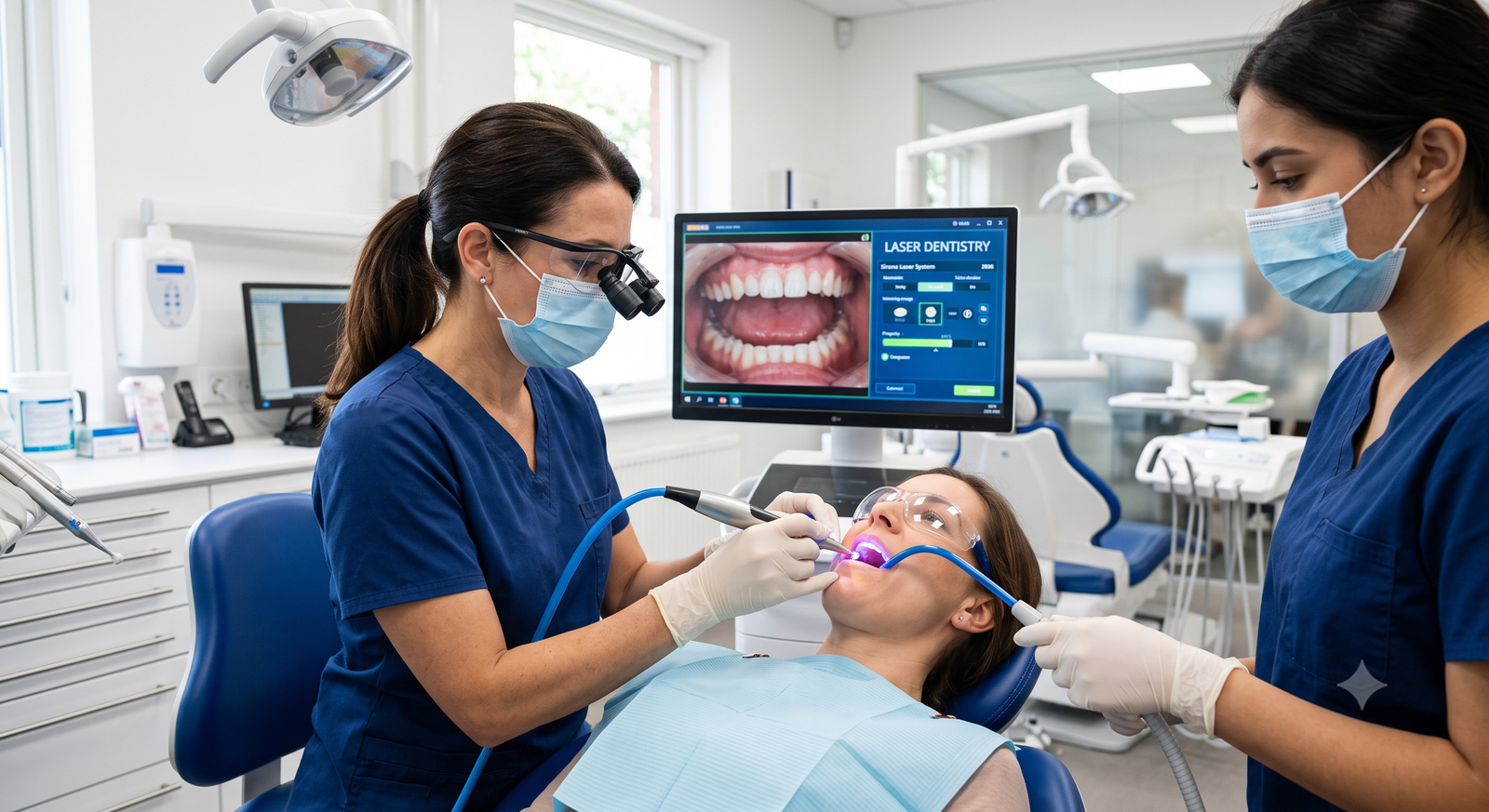
Dental lasers deliver focused light energy for specific hard- or soft-tissue applications. Different wavelengths interact with tissue differently, which means the device and settings must match the intended procedure.
Where lasers may be useful
Depending on equipment and clinical need, lasers can assist with selected gum procedures, soft-tissue contouring, disinfection and management of certain lesions. They may offer precise tissue control and reduced bleeding in appropriate cases.
Myth: every laser treatment is painless
Comfort depends on the procedure, inflammation, patient sensitivity and technique. Local anaesthesia may still be needed. “Laser” should never be used as a promise that treatment has no risks or recovery.
Myth: lasers replace all dental instruments
Conventional instruments, ultrasonic scalers, rotary tools and surgery remain necessary for many treatments. Modern dentistry selects the safest effective tool rather than using one device for everything.
What should patients ask?
Why is a laser suitable for this procedure?
What alternatives are available?
Will anaesthesia be required?
What aftercare and risks should be expected?
Laser dental care in Bijnor
At Amber Dental Care, technology is considered alongside examination and clinical need. Dr. Parvez Alam Khan explains the purpose, alternatives and expected recovery before treatment.